Environmental Science Research Projects
Microgrid Energy Systems with Equitable Energy Solutions
My research will determine the most regulatory challenge-free approach that will support and contribute to the impact of regulatory frameworks on microgrid interconnectedness and policies that promote energy equity. This research will incorporate evidence-based policymaking that has facilitated stakeholder collaboration in advancing resilient and equitable energy infrastructures (microgrids) by leveraging a combination of case study analysis and actionable recommendations from states and countries with successful microgrids with workable policies.

Resilient Coastal Communities
Collaborated in investigating measures to manage future flooding due to storm surges using a multi-hazard approach and conducted legal research using the Water Resources Development Act of 2022. Infused the analysis of select coastal flood protection projects utilizing “nature-based solutions” to help develop case studies of sound nature-based projects in the NYC area that could be used for wider learning in other contexts.

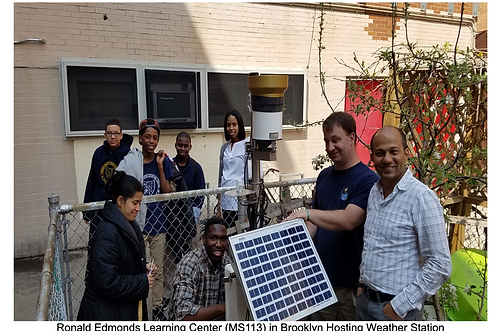
New York City-Urban Hydro-meteorological Testbed (NY-uHMT)
The Meteorological test-bed (weather station) is a part of the research study that is housed on the grounds of our school community in the community garden. We used the data collected and the resources provided by NOAA-CREST to encourage and support more in-depth learning of the Earth's systems and Science practices centered around climate (change) and weather and data analysis.
Academic Research Projects
Action Research: Student-friendly progress monitoring strategies
Cultivating, designing, and implementing strategies that encourage students to become stakeholders in their learning while processing their learning style. The action project was centered around providing students with disabilities with the support that leads to the practice of independent executive function skills.

Hybrid Pedagogical Learning Tools
The Learner designed Action plan includes categories of professional learning for remote learning that encompasses assessments, assignments, and delivery of instruction. In order to adhere to a set of parameters and criteria, including not limited to educators being able to develop their skills, and strengthen their pedagogical practices all while gaining tools and experiences to drive to their professional practice through asynchronous instruction.
